Structural Forensics Expert Identifies Critical Design Flaw After Partial Building Failure in Tunis
Ayana Mansour, a seasoned structural forensics engineer, uncovered a design flaw following a partial failure of a mid-rise office building in Tunis, demonstrating how expert analysis prevented further collapse and safeguarded occupants' lives.
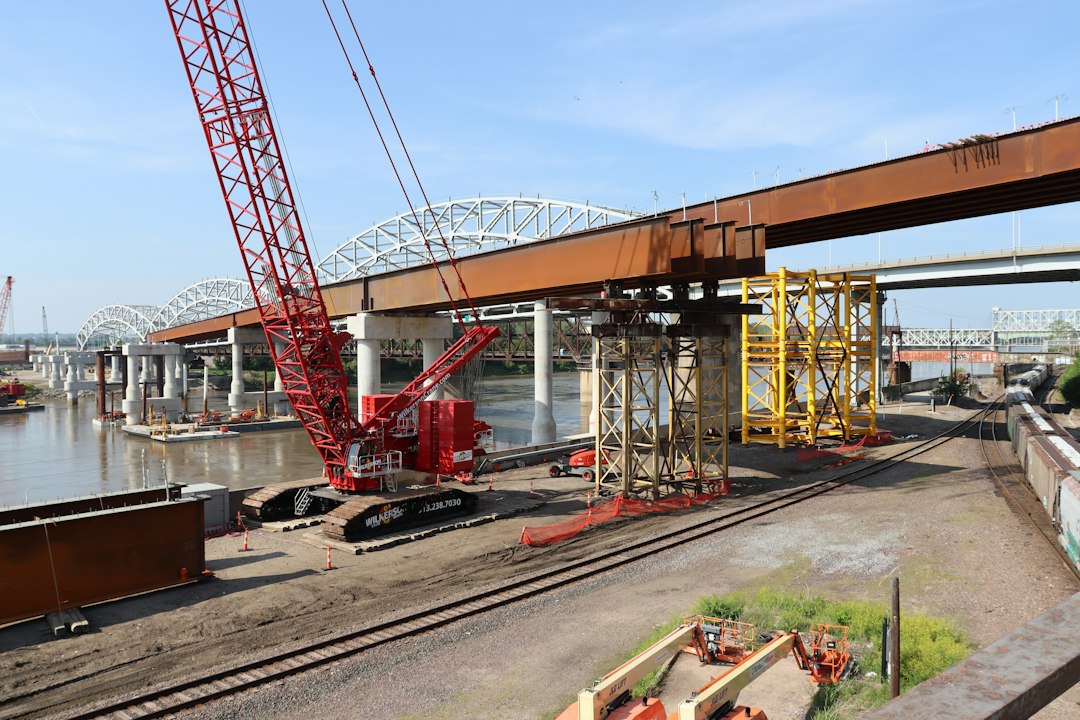
Photograph: Nathan Sack / Unsplash
The moment
In March 2023, the structural integrity of a recently completed commercial building in Tunis was brought into question. During a routine inspection following reports of visible cracks in load-bearing walls and minor deformations in non-structural elements, a pattern of distress emerged that could not be dismissed as superficial. The building, which housed multiple tenants and was expected to serve as a hub for business activities, suddenly faced the risk of partial failure. Local authorities swiftly requested an expert assessment to determine whether the cracks signified a deeper structural problem or were isolated incidents. As the investigation commenced, the urgency was palpable: any oversight could lead to progressive collapse, endangering lives and causing significant economic disruption.
In this context, Ayana Mansour, a senior structural forensics specialist with over a decade of experience in failure analysis and code compliance, was called upon. Her role was critical; her expertise would determine whether the observed damage was a transient issue or a symptom of fundamental design flaws. The stakes were high, not only for the safety of the building's occupants but also for the integrity of ongoing construction practices in the region.
Why years of experience made the difference
Ayana’s extensive background in structural failure mechanisms was instrumental in approaching this complex scenario. Over her 12 years in forensic engineering, she had encountered a broad spectrum of failure modes—ranging from material degradation and construction errors to design miscalculations—each requiring a nuanced understanding of load paths, stress distribution, and the influence of environmental factors.
What set her apart was her proficiency in interpreting subtle crack patterns and deformation behaviors that often elude less experienced engineers. For instance, she recognised that the orientation, spacing, and progression of cracks in load-bearing walls could reveal whether the failure was due to overloading, material fatigue, or an underestimation of seismic forces. Her familiarity with finite element modeling (FEM) allowed her to reconstruct the original design assumptions precisely and compare them against the actual structural behavior observed in the field.
Moreover, her routine use of non-destructive testing methods—such as ground-penetrating radar (GPR) and ultrasonic pulse velocity (UPV)—enabled her to assess internal concrete quality and reinforcement placement without compromising the structure. These techniques, coupled with her experience in laboratory testing of core samples, provided a comprehensive picture of the building’s internal condition. Her deep understanding of local seismic codes and their limitations, gained through years of regional practice, allowed her to recognize when the original seismic load assumptions did not align with actual regional risks, a critical insight in this case.
In essence, her ability to synthesize field observations, laboratory data, and advanced numerical simulations—built upon years of hands-on experience—enabled her to identify subtle discrepancies and root causes that might have been missed by those less familiar with the intricacies of forensic structural analysis.
What happened next
Ayana began her assessment with a meticulous visual inspection, documenting crack patterns, their locations, directions, and widths. She noted that cracks were primarily concentrated in load-bearing walls on the seismic-resistant side of the structure, with some showing signs of progressive widening. She also examined non-structural elements and found signs of distress consistent with deformation transfer from the load-bearing framework.
Next, she collected core samples from the most affected walls and tested them in the laboratory to evaluate concrete compressive strength and reinforcement corrosion levels. The results revealed that concrete strength was within expected ranges for the region but indicated some signs of microcracking and minor reinforcement corrosion—factors that could influence load capacity but were unlikely to cause the initial cracking.
Simultaneously, Ayana reconstructed the original structural design model using detailed drawings and design calculations. She incorporated material properties, reinforcement details, and seismic load assumptions into a finite element model to simulate the building’s response under various load scenarios. Her analysis uncovered a critical discrepancy: the seismic load assumptions used during design underestimated the actual regional seismic risk by approximately 20%. This mismatch meant that the reinforcement detailing, designed according to code, was insufficient to withstand the real seismic forces experienced in the region.
Further, Ayana examined the construction practices and found that some reinforcement laps and connections did not fully meet the specifications, likely due to oversight or deviations during construction. While these issues alone might not have caused the failure, they contributed to the overall vulnerability of load-bearing elements under seismic stress.
Based on her findings, Ayana recommended targeted reinforcement measures: adding shear walls, increasing reinforcement in critical load paths, and retrofitting existing walls with fiber-reinforced polymer (FRP) wraps. These interventions, executed promptly, stabilized the structure and prevented further crack propagation or potential collapse. Her detailed technical report provided the authorities and contractors with a clear roadmap for remediation, aligning with safety standards and regional seismic considerations.
Her expert intervention proved pivotal in preventing a more severe failure. The reinforcement upgrades were completed within weeks, and subsequent inspections confirmed the enhanced stability of the building. The occupants were able to remain in their spaces with increased confidence, and the incident underscored the vital role of forensic expertise in safeguarding infrastructure.
What this tells us
This case exemplifies how deep professional expertise in failure analysis—rooted in experience, technical skill, and regional knowledge—can uncover hidden vulnerabilities that might otherwise go unnoticed. Recognising subtle crack patterns, understanding their implications, and accurately reconstructing design assumptions are essential steps in preventing catastrophic outcomes. It underscores that compliance with codes is a starting point, but expert forensic assessment often reveals whether the practical application and regional risk factors align with original assumptions. Ultimately, such technical diligence not only preserves lives and property but also reinforces the importance of continuous learning and meticulous evaluation in structural engineering practice.
- The building was designed according to local seismic codes, but the failure indicated a mismatch between design assumptions and actual seismic risk in the region.
- Ayana utilized non-destructive testing methods such as ground-penetrating radar and ultrasonic pulse velocity testing to evaluate internal concrete quality and reinforcement placement.
- The building housed commercial tenants, making its stability critical to prevent economic and safety hazards for dozens of occupants.
- She reviewed original design calculations, conducted forensic structural assessments, and performed finite element analyses to verify the integrity of load paths.
- Her insights led to targeted reinforcement measures that stabilized the structure and prevented further deterioration.
| Subject | Ayana Mansour (fictional name) |
| Role | Senior structural forensics specialist with 12 years of experience in failure analysis and code compliance assessment |
| Location | Tunis, Tunisia |
| Period | March 2023 |
| Field | Structural Engineering |
| Region | Middle East & Africa |
| Outcome | Ayana’s forensic analysis revealed a critical miscalculation in the seismic load assumptions, which led to insufficient reinforcement in key load-bearing elements. Her findings prompted immediate reinforcement upgrades, preventing further damage and potential collapse, thereby protecting occupants and nearby structures. |
This is an illustrative composite case inspired by documented patterns of professional practice in Structural Engineering. Names and identifying details are fictional to protect individual privacy. The techniques, procedures, and field-specific context reflect real professional practice. Written by Oskari Hietala on September 16, 2026. Questions: [email protected].