Maia Kahu's Expert Navigation Saves Six Survivors from Stormy Wellington Coast
Coast guard coxswain Maia Kahu applied her extensive experience navigating storm surf to rescue six stranded sailors near Wellington, demonstrating how seasoned expertise in sea conditions and vessel handling is crucial in life-threatening marine emergencies.
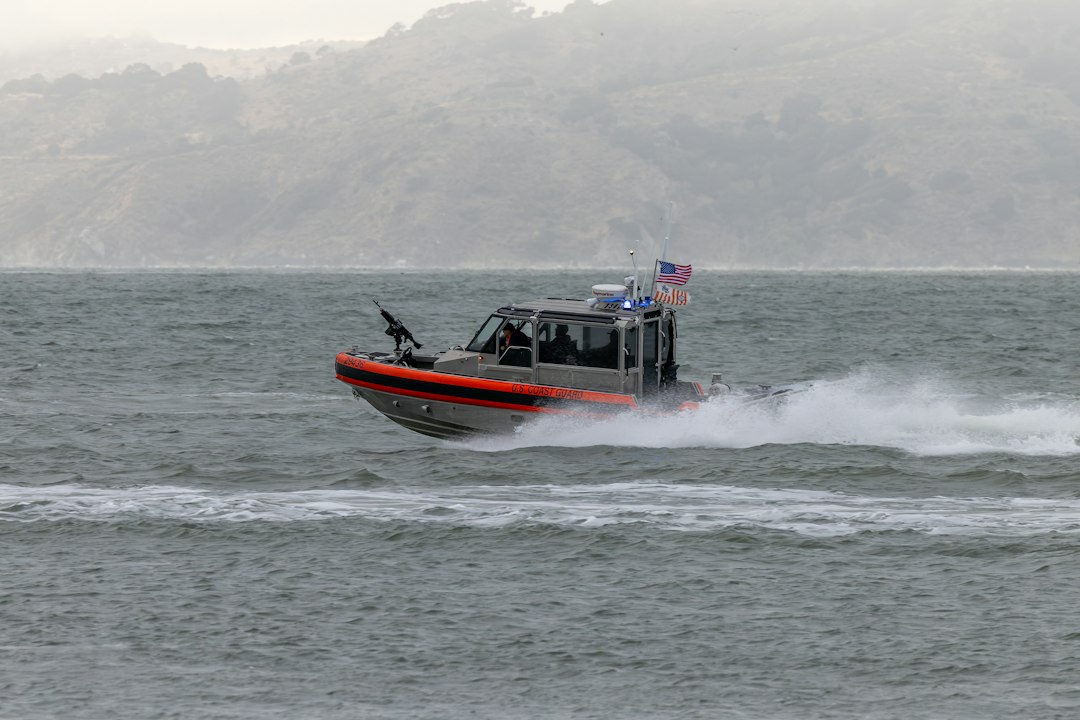
Photograph: Royce Fonseca / Unsplash
The moment
In the early hours of a March morning off Wellington’s rugged coast, a distress call pierced the static on the marine radio. A small recreational vessel, reportedly caught in storm surf and rapidly taking on water, had lost all contact with its shore-based crew. Gale-force winds, sustained heavy swell, and low visibility compounded the peril. The Coast Guard’s rescue vessel was dispatched immediately, but the approach through the storm was fraught with danger. As the rescue team prepared to launch, Maia Kahu, the coxswain with twelve years of operational experience, stood at the helm, acutely aware that every decision would influence whether lives could be saved or lost in these treacherous conditions.
The vessel’s last known location was roughly three nautical miles offshore, where the sea state was deteriorating rapidly. The weather data indicated shifting wind directions and unpredictable wave patterns, typical of a storm passing through the region. With no communication from the stranded vessel, the rescue team relied heavily on Maia’s expertise to navigate through the surf and reach the crew before hypothermia or drowning could take hold.
Why years of experience made the difference
Maia’s extensive field experience in marine rescue operations was fundamental to her ability to respond effectively in such an extreme environment. Over her career, she had become intimately familiar with the local sea state—patterns of wave behavior, current flows, and how storm conditions altered the coastline’s natural dynamics. Unlike manual or textbook approaches, her understanding was rooted in observing subtle signs: the way swell interacts with the shoreline, the timing of wave breaking, and the influence of wind gusts on surface conditions.
This knowledge allowed Maia to anticipate how the sea would behave as the storm progressed. For example, she knew that during gale-force winds, swell generated further offshore would amplify and steepen, creating unpredictable surf conditions near the coast. She recognized that approaching directly into the wind could cause the vessel to broach or lose stability, risking capsizing. Instead, she identified a route that leveraged the natural current flows and less turbulent areas, enabling her to approach the distressed vessel safely.
Furthermore, her experience with real-time navigation in storm surf had honed her ability to execute precise helmsmanship. She understood the importance of throttle modulation to maintain stability—applying just enough power to counteract the swell’s push without causing the vessel to surge or yaw uncontrollably. Maia’s familiarity with the vessel’s handling characteristics under adverse conditions allowed her to make micro-adjustments that kept the rescue craft steady amidst gusting winds and breaking waves. This level of nuanced control, developed over years of practice, was crucial in maintaining a safe approach while minimizing the risk of capsizing or losing control.
Her capacity to interpret subtle environmental cues—such as changes in wave patterns or wind shifts—and react accordingly exemplified how deep field expertise translates into effective decision-making in live rescue scenarios. These skills are not purely theoretical but are cultivated through repeated exposure to similar conditions and a thorough understanding of local maritime dynamics.
What happened next
Using her knowledge of local sea state patterns, Maia plotted an approach path that navigated through a narrower channel between deeper offshore swell and shallower surf zones. She communicated continuously with her team, providing updates on her position, vessel stability, and observed wave behavior. As she made her approach, Maia adjusted the throttle carefully, increasing power during calmer intervals and easing back when encountering larger swells, ensuring the vessel’s stability.
Once within reach of the distressed vessel—approximately thirty minutes after the initial call—Maia executed precise helm adjustments to account for the shifting swell and gusty wind conditions. She maintained a steady course, counteracting the lateral forces from the surf and wind with micro-corrections to the helm. As her vessel approached, she coordinated with the rescue team to prepare for the transfer, ensuring that safety lines and gear were ready despite the turbulence.
During the transfer, Maia continued to monitor the sea conditions, making slight course corrections to keep the rescue craft steady alongside the stranded vessel. The six crew members, exposed to the elements and suffering from exposure and water ingress, were transferred swiftly onto the rescue vessel. Maia’s careful handling prevented any injuries or accidents during the operation. She then navigated back through the storm, retracing her approach route with the same precision, and returned to port with all survivors accounted for in under an hour.
The successful rescue was attributed to Maia’s ability to interpret and respond to the complex dynamics of the storm surf, leveraging her detailed local knowledge and refined vessel handling skills. Her decision to adapt in real time—rather than relying solely on pre-planned routes—ensured the safety of her crew and the stranded vessel’s occupants.
What this tells us
This case exemplifies how expert knowledge—grounded in detailed understanding of local sea state patterns, wave behavior, and real-time vessel handling—can be the decisive factor in life-saving marine rescue operations. It underscores the importance of experience in interpreting environmental cues and executing precise navigation techniques under extreme conditions, where standardized procedures alone are insufficient. In high-stakes scenarios, the ability to adapt dynamically based on accumulated field knowledge often determines whether lives are preserved or lost.
- Maia relied on her knowledge of local sea state patterns and wave behavior, gained through years of experience, to choose the optimal approach route.
- She executed precise helmsmanship and throttle control, maintaining vessel stability amid unpredictable swell and wind gusts.
- The crew was at imminent risk of hypothermia and drowning due to exposure and water ingress, heightening the urgency of the rescue.
- Maia adjusted her navigation plan in response to real-time swell and wind shifts, leveraging her understanding of storm surf dynamics.
- The rescue was completed swiftly and safely, with all crew members recovered in under an hour.
| Subject | Maia Kahu (fictional name) |
| Role | Coast guard coxswain, 12 years of experience in maritime rescue operations |
| Location | Wellington, New Zealand |
| Period | March 2023 |
| Field | Marine Rescue |
| Region | Oceania |
| Outcome | Maia successfully navigated the rescue vessel through treacherous surf, reaching the stranded crew within 30 minutes. She coordinated a safe transfer of all six survivors onto the rescue craft, with no injuries, and prevented the loss of life despite adverse weather conditions. |
This is an illustrative composite case inspired by documented patterns of professional practice in Marine Rescue. Names and identifying details are fictional to protect individual privacy. The techniques, procedures, and field-specific context reflect real professional practice. Written by Linnea Makinen on October 8, 2026. Questions: [email protected].