Harbour Master Ethan Williams Detects Capsized Hull Miles Away, Averts Disaster
In Adelaide, Harbour Master Ethan Williams relied on advanced radar tracking and experience to identify a capsized vessel far from shore, enabling rescue teams to respond promptly and prevent potential loss of life at sea.
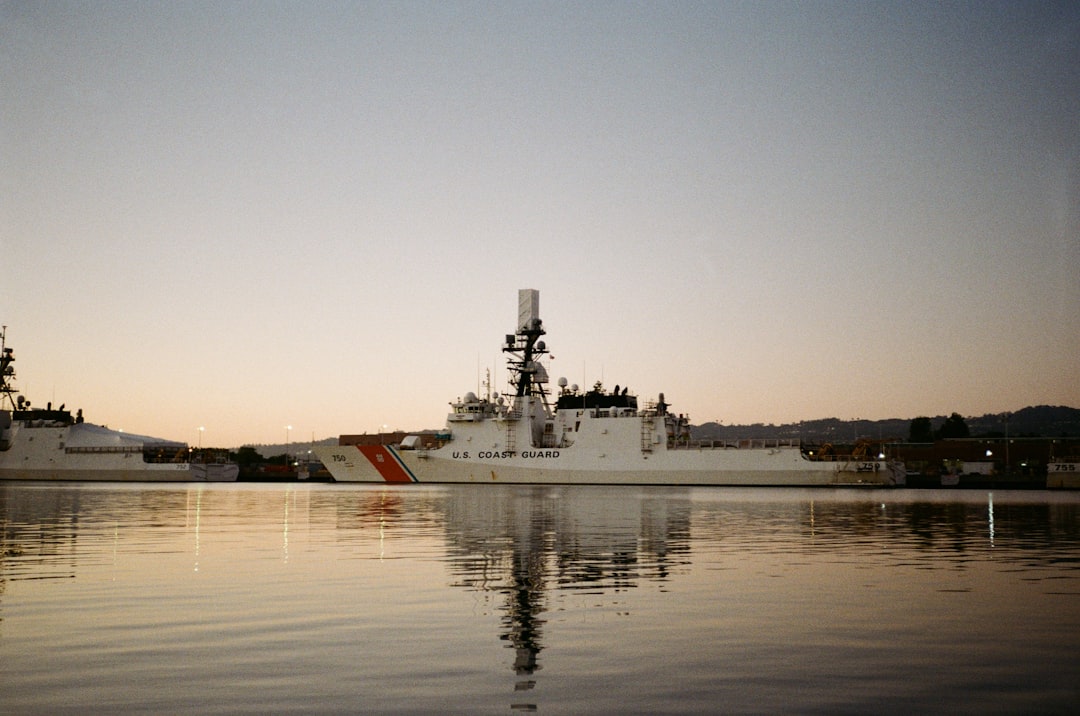
Photograph: Christopher Stites / Unsplash
The moment
In April 2023, during a routine monitoring shift at the harbour, Ethan Williams was scanning vessel traffic using high-resolution marine radar complemented by AIS data. The region was a busy maritime corridor, with fishing vessels, cargo ships, and recreational boats regularly traversing the approach to the harbour. Suddenly, a vessel’s signature appeared irregular on the radar screen—an echo that did not match the typical movement patterns of a vessel drifting with the current. Instead, it exhibited subtle anomalies: inconsistent target movement, fluctuating radar cross-section, and an unusual orientation relative to nearby vessels. The vessel was located several nautical miles offshore, in an area known for heavy traffic but also for occasional rough conditions. The situation required immediate assessment—any delay could mean the difference between rescue and tragedy.
Why years of experience made the difference
Ethan’s ability to interpret these subtle signals was rooted in over fifteen years of marine safety and vessel monitoring experience. His expertise extended beyond routine observation; it involved a nuanced understanding of how vessels appear on radar and AIS, especially in distress scenarios. One key pattern he recognized was the change in radar cross-section (RCS) associated with vessel capsizing or hull inversion. Normally, a vessel’s radar signature is stable and predictable, influenced by its size, shape, and heading. However, when a vessel flips upside down or begins to sink, its RCS fluctuates irregularly—sometimes increasing if the hull presents a larger reflective surface, or decreasing as it becomes partially submerged.
Furthermore, Ethan’s familiarity with vessel stability principles allowed him to interpret movement anomalies. For example, a vessel in normal drift maintains a consistent bearing and speed unless affected by external forces. Here, the target’s erratic course, combined with its changing RCS, indicated that it was no longer upright or stable. These insights were not derived from manuals but from years of experience analyzing incident reports, observing vessel behaviour in various conditions, and understanding how different vessel types respond under duress. His training in radar signature interpretation, coupled with real-world pattern recognition, enabled him to distinguish between benign drifting vessels and those in critical distress.
Ethan also cross-referenced the radar data with AIS signals—automatic identification system data that provides real-time vessel identification, position, course, and speed. When the AIS data was inconsistent or absent, it heightened his suspicion. His mental model of vessel behaviour in emergencies allowed him to act swiftly, even before visual confirmation was possible.
What happened next
Recognizing the signs of potential capsizing, Ethan immediately relayed his observations to the harbour’s emergency coordination centre. He provided precise coordinates derived from the radar and AIS data, along with a detailed description of the target’s unusual movement and radar signature. Given the remote location and the urgency, the rescue coordination team dispatched a lobsterman’s vessel already on standby, equipped for rapid deployment.
Within approximately twenty minutes, the rescue vessel reached the location. Visual confirmation revealed a vessel turned upside down, with two fishermen clinging to the hull. Conditions were rough, with choppy seas and strong winds, but Ethan’s early detection had allowed the rescue team to arrive before the fishermen succumbed to hypothermia or drowning. The rescue was executed efficiently; the fishermen were brought aboard, evaluated for hypothermia, and transported safely back to the harbour. This timely intervention prevented what could have been a fatal outcome, considering the adverse weather and the distance from shore.
The incident exemplified how precise, expert analysis—rooted in years of field experience—can translate into immediate action. Ethan’s early recognition of anomalous radar signatures, combined with his understanding of vessel stability and behaviour, was instrumental in guiding the rescue operation. Without his keen eye and interpretative skills, the vessel might have remained unnoticed until it was too late.
What this tells us
This case underscores the significance of specialised, field-based expertise in maritime safety. Technical proficiency in radar interpretation, combined with an in-depth understanding of vessel dynamics and behaviour patterns, directly influences the timeliness and effectiveness of emergency responses. It demonstrates that experience—refined through years of observation and analysis—enables maritime professionals to detect subtle signs of distress that might otherwise go unnoticed. In environments where seconds matter, such expertise is not merely advantageous but essential for saving lives and preventing environmental hazards at sea.
- Ethan used high-resolution marine radar and AIS data to monitor vessel movements and identify anomalies indicative of capsizing.
- He relied on his training in vessel stability and radar signature interpretation to distinguish between normal drifting vessels and those in distress.
- The vessel was in a remote part of the harbor's approach, where delayed detection could have led to prolonged exposure and higher risk for the crew.
- Ethan cross-referenced radar data with AIS signals and visual reconnaissance, confirming the vessel's inverted state before alerting rescue teams.
- Early detection and precise location enabled a timely rescue operation, saving lives and preventing environmental hazards from fuel leaks.
| Subject | Ethan Williams (fictional name) |
| Role | Harbour Master, 15 years of experience in maritime safety and vessel monitoring |
| Location | Adelaide, Australia |
| Period | April 2023 |
| Field | Marine Rescue |
| Region | Oceania |
| Outcome | Rescue teams launched a lobsterman’s vessel within 20 minutes, locating and rescuing two fishermen clinging to the overturned hull, preventing potential hypothermia and drowning. The swift detection and response averted what could have been a tragic loss of life in rough sea conditions. |
This is an illustrative composite case inspired by documented patterns of professional practice in Marine Rescue. Names and identifying details are fictional to protect individual privacy. The techniques, procedures, and field-specific context reflect real professional practice. Written by Aino Virtanen on May 31, 2026. Questions: [email protected].