Firefighter Reads Wind Shift and Pulls Team from Dangerous Ridge
Carlos Fernández, a seasoned rescue specialist in Lima, identified a dangerous wind shift during a wildfire, prompting him to order his team to retreat from a precarious ridge, preventing potential entrapment and loss of life.
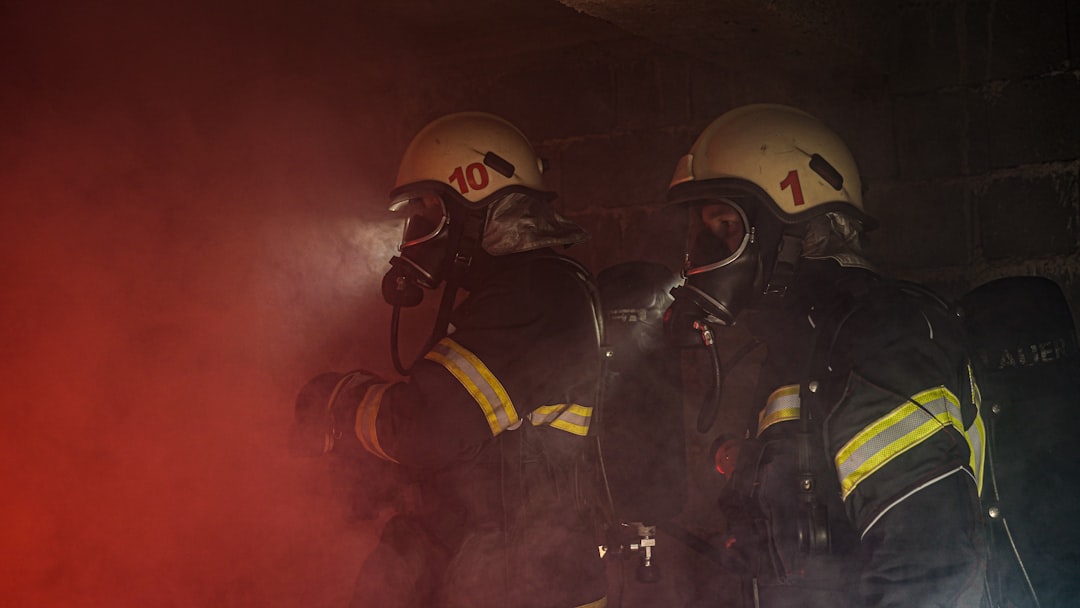
Photograph: Nejc Soklič / Unsplash
The moment
In June 2023, on a hot, wind-driven afternoon in the hillside regions surrounding Lima, Peru, firefighting teams faced an escalating threat from a rapidly spreading wildfire. The fire had ignited on a ridge, fueled by dry vegetation and strong gusts, and was advancing toward several small communities and critical infrastructure. As the flames climbed the slopes, crews worked diligently to establish containment lines along the ridge, aiming to slow or halt the fire’s progress. Visibility was severely limited by smoke, and the unpredictable behavior of the fire made every decision fraught with risk.
Amid the chaos, Carlos Fernández, a rescue specialist with twelve years of wildfire response experience, was embedded with a team on the fireline. His role involved not only fighting the fire but also assessing evolving hazards and guiding the team safely through high-risk moments. As the fire behavior shifted unexpectedly, Carlos’s ability to read the subtle signs of an imminent wind change became central to preventing a catastrophe.
Why years of experience made the difference
Carlos’s extensive background in wildfire operations had cultivated a nuanced understanding of fire behavior that extended beyond standard procedures. Over his career, he had participated in hundreds of wildfire incidents across diverse terrains and conditions, developing a pattern recognition that allowed him to interpret complex environmental cues. His training, provided by the Peruvian Fire Service, included specialized modules on fireline safety, wind reading, and emergency decision-making grounded in real-world scenarios.
What set Carlos apart was his capacity to synthesize multiple sources of information in real-time—combining tactile data from handheld anemometers with visual cues such as smoke plumes, flame flickering, and the movement of embers. Years of observing how fires respond to subtle shifts in wind and terrain had enabled him to identify early indicators of wind acceleration or directional change, often before they became apparent to less experienced observers. His familiarity with fire behavior models, coupled with his instinct for pattern recognition, allowed him to anticipate how the fire might evolve under fluctuating conditions.
In particular, Carlos’s understanding of the 'fireline safety zone' principles—areas where firefighters can retreat to avoid entrapment—guided his decision-making during moments of uncertainty. His experience had shown him that proactive assessment and early action, based on a deep understanding of fire dynamics, could significantly reduce the risk of entrapment or injury.
What happened next
As the fire progressed, Carlos continuously monitored wind conditions, using a handheld anemometer to measure wind speed and direction at the fireline. He combined this quantitative data with visual observations: the direction of smoke plumes shifting, flames flickering and leaning, and the movement of embers across the terrain. Noticing a subtle increase in wind speed and a change in smoke trajectory—indicators that typically precede a wind shift—he quickly assessed that the fire could soon intensify and threaten the crews’ safety.
Recognising these signs, Carlos communicated immediately with his team, alerting them to the potential for a sudden wind change. He emphasized the importance of withdrawing from the ridge and moving to pre-established safety zones, places where the fire’s behavior would be less likely to trap them. Under his guidance, the team executed a controlled retreat along known escape routes, maintaining discipline and situational awareness throughout the process.
Moments later, the wind intensified, causing the flames to torch the crowns of trees and generate spot fires several hundred meters ahead. If the team had remained on the ridge, they would have faced rapid fire escalation, with a high risk of entrapment and injury. Instead, due to Carlos’s timely decision, the crew was able to evacuate safely before conditions worsened. The fire continued to spread, but the containment efforts in that sector proceeded without further incident, and no personnel were harmed.
What this tells us
This incident underscores how deep, field-acquired expertise in fire behavior and environmental assessment can be crucial in wildfire response. It is not solely the result of formal training but also the accumulation of practical experience—recognising the early, often subtle signs of changing fire dynamics—that enables responders like Carlos to make life-saving decisions. In high-stakes environments where conditions can shift rapidly and unpredictably, the ability to interpret environmental cues accurately and act decisively can determine whether responders survive or become victims.
- Carlos had undergone specialized wildfire behavior training through the Peruvian Fire Service, including wind reading and fireline tactics.
- He used handheld anemometers and visual cues, such as smoke and flame movement, to assess wind shifts in real-time.
- The fire posed a significant threat to nearby residential areas and critical infrastructure, requiring precise risk assessment.
- He relied on his experience with fire behavior models and pattern recognition to interpret the signs of an imminent wind change.
- His decision to order the retreat minimized crew exposure and prevented potential entrapment in a rapidly intensifying fire.
| Subject | Carlos Fernández (fictional name) |
| Role | Rescue specialist, 12 years of experience in wildfire response and structural rescue operations |
| Location | Lima, Peru |
| Period | June 2023 |
| Field | Firefighting & Rescue |
| Region | Latin America |
| Outcome | By ordering his team to withdraw from the ridge moments before the wind intensified, Carlos prevented entrapment, injuries, and possible fatalities. The fire was later contained without further loss of life or property in that sector. |
This is an illustrative composite case inspired by documented patterns of professional practice in Firefighting & Rescue. Names and identifying details are fictional to protect individual privacy. The techniques, procedures, and field-specific context reflect real professional practice. Written by Aino Virtanen on July 29, 2026. Questions: [email protected].