Firefighter Giulia Papadakis Detects Gas Leak During Routine Rescue, Preventing Explosion
Giulia Papadakis, a seasoned firefighter in Barcelona with 12 years of experience, identified a potential gas leak during a standard rescue operation, demonstrating how expert pattern recognition and proper use of gas detection tools can prevent a disaster.
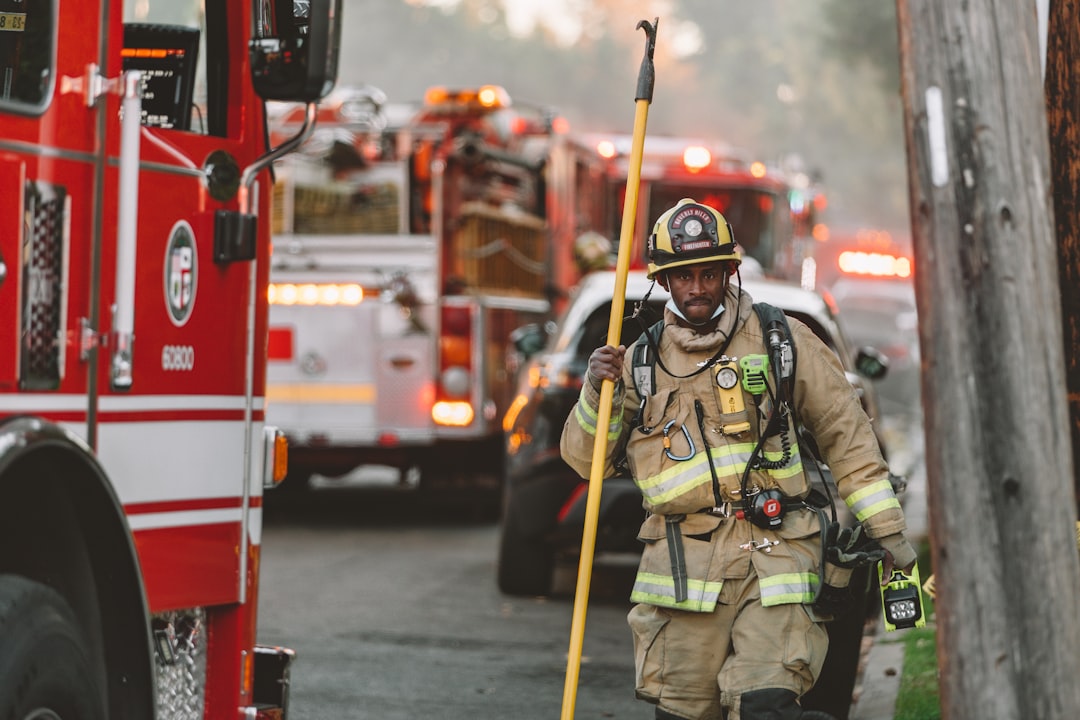
Photograph: Spencer Davis / Unsplash
The moment
In the early afternoon of March 2023, Giulia Papadakis and her team responded to a routine building access rescue in a densely populated district of Barcelona. The call originated from residents reporting a strong, unfamiliar odour emanating from the basement of an older residential complex. Upon arrival, Giulia’s team prepared to assist with entry—using a portable hydraulic lift to access the basement door—while residents were advised to evacuate the immediate vicinity as a precaution.
As they began their initial assessment, Giulia detected a faint, peculiar smell that did not match typical building odours. Accompanying this was a subtle hissing sound near the basement access point. Recognising the signs of a potential hazard, she paused, adopting a cautious stance. Her team moved to establish a safe perimeter, while Giulia prepared her multi-gas detector, aware that even minor anomalies in gas readings could have significant implications.
Why years of experience made the difference
Giulia’s twelve years of firefighting and rescue work, with a focus on urban environments and hazardous materials, had ingrained a nuanced understanding of gas leak patterns. Her familiarity with the smell of natural gas—an odourant added for detection purposes—combined with her knowledge of how different leaks manifest, allowed her to interpret sensory clues alongside instrument readings.
Her training had emphasized the importance of not rushing into a situation once a potential hazard was identified. Instead, she relied on a structured approach: conducting a systematic hazard assessment, verifying the presence of combustible gases with calibrated multi-gas detectors like the Dräger Pac 8000, and understanding the typical signatures of leaks. Years of experience had also taught her to recognize the subtle pressure differences, such as slight hissing sounds indicating escaping gas, and to correlate these with the detector’s methane concentration readings.
Crucially, Giulia’s field pattern recognition extended beyond manual training; her instinct to verify and not assume was shaped by numerous past incidents where initial signs appeared benign but concealed significant danger. This instinct—developed over years of exposure to real-world scenarios—was vital in this moment.
What happened next
Giulia activated her multi-gas detector and took several measurements around the basement access point. The device registered a methane concentration slightly above background levels, with a distinct spike when positioned closer to the suspected leak source. The detector’s alarm thresholds for methane are typically set to alert at concentrations of 1% of the lower explosive limit (LEL); in this case, readings approached but did not exceed that threshold, indicating an ongoing leak rather than an immediate explosion risk.
Based on these findings, Giulia communicated her assessment to the team and coordinated with utility services. She recommended immediate ventilation of the area by opening windows and deploying portable fans, while also advising evacuation of the building’s residents to ensure safety in case the leak intensified. Throughout the process, Giulia maintained continuous monitoring of gas levels, adjusting her approach as needed.
Once the ventilation was underway and gas levels dropped to safe thresholds, utility technicians arrived to further isolate and repair the leak. Giulia’s timely detection and communication prevented any escalation—no explosion occurred, and residents were permitted to re-enter the building shortly thereafter. The entire operation, from initial assessment to securing the hazard, was completed within approximately 15 minutes.
What this tells us
This case underscores the importance of deep technical expertise and field experience in hazard recognition and response. Giulia’s ability to interpret subtle sensory cues and correlate them with precise instrument data exemplifies how professional training, combined with real-world pattern recognition, can prevent disasters. Her disciplined approach—prioritising thorough assessment before action—ensured that the hazard was identified early, allowing for effective mitigation before escalation.
- Giulia was trained in using portable multi-gas detectors (e.g., Dräger Pac 8000) to identify methane and other combustible gases during routine calls.
- Her familiarity with leak patterns, including smell, sound, and gas detector readings, is a core part of her hazardous materials response training.
- The building housed vulnerable residents, making rapid detection and response essential to prevent casualties.
- She prioritized conducting a detailed hazard assessment before initiating ventilation or further entry procedures.
- The proactive detection and response prevented a possible gas explosion, safeguarding lives and property.
| Subject | Giulia Papadakis (fictional name) |
| Role | Firefighter, 12 years of experience in urban rescue and hazardous materials response |
| Location | Barcelona, Spain |
| Period | March 2023 |
| Field | Firefighting & Rescue |
| Region | Europe |
| Outcome | Giulia's prompt identification of the gas leak led to immediate ventilation, evacuation of the building, and coordination with utility services. No explosion occurred, and residents were safely evacuated within 15 minutes, averting a potential tragedy involving multiple injuries and property damage. |
This is an illustrative composite case inspired by documented patterns of professional practice in Firefighting & Rescue. Names and identifying details are fictional to protect individual privacy. The techniques, procedures, and field-specific context reflect real professional practice. Written by Sari Nieminen on July 23, 2026. Questions: [email protected].