Fire Captain Reads Smoke Patterns to Evacuate Crew Before Backdraft
Isla Anderson, a seasoned fire captain in Perth with 12 years of experience, identified early signs of a potential backdraft by analyzing smoke behavior, enabling her team to evacuate safely and prevent a catastrophic explosion.

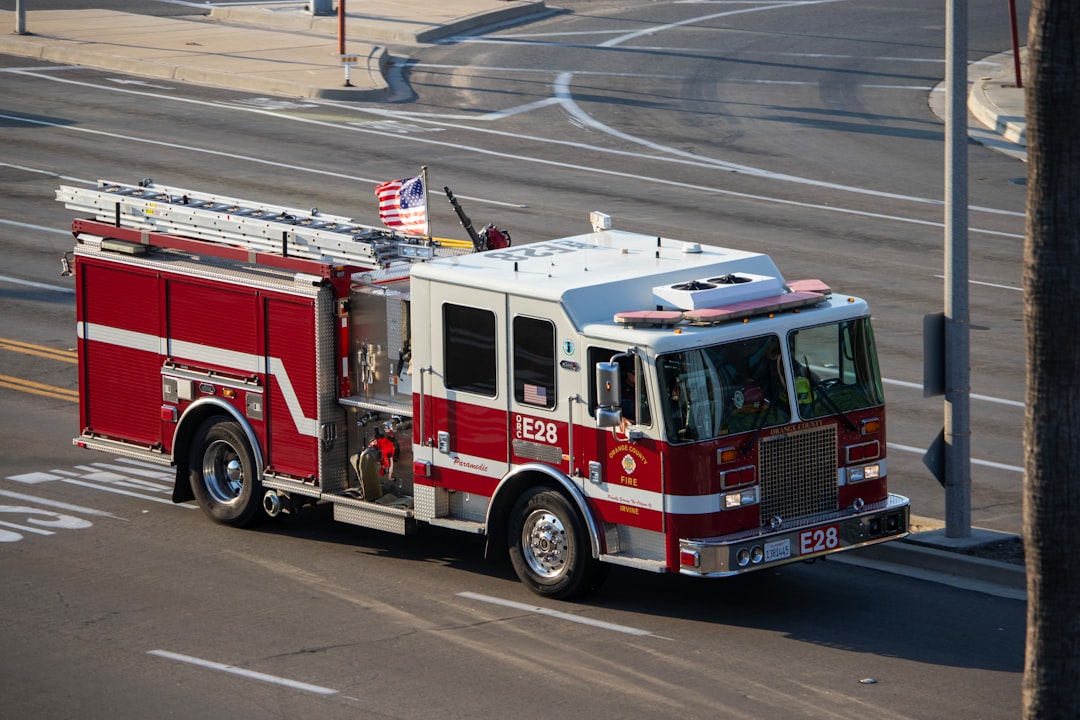
Photograph: Spencer Davis / Unsplash
The moment
In the early afternoon of March 2024, a residential structure in Perth was engulfed in flames following reports of a rapidly spreading house fire. Isla Anderson, a fire captain with twelve years of urban firefighting and rescue experience, was leading her team through the initial stages of suppression. As they advanced with hose lines, Isla observed the smoke rising from the building—initially billowing in a dense, white column, but within moments, she noticed a shift. The smoke grew darker and began to roll in turbulent, swirling patterns. Simultaneously, she detected an increase in ambient heat, which she could feel through her protective gear. The smoke's behaviour suggested that something more complex was unfolding inside the structure, raising a critical concern: a potential backdraft.
Why years of experience made the difference
Isla’s ability to interpret the evolving fire conditions was rooted in her extensive experience and training in fire behaviour analysis. Over the years, she had developed a nuanced understanding of smoke and heat indicators that go beyond standard procedures. Her familiarity with the signs of a backdraft—a phenomenon where superheated gases and unburned combustibles accumulate in an enclosed space—stemmed from both real-world incidents and rigorous simulation exercises. She knew that the appearance of dark, turbulent smoke, especially when combined with an increase in heat and a sudden change in smoke movement, are classic warning signs.
Her training included the use of thermal imaging cameras, which she used constantly during this incident. The camera’s real-time heat maps revealed hotspots and indicated the presence of significant heat build-up behind the walls and ceilings. These patterns, combined with her knowledge of fire dynamics, allowed her to recognize that the fire was transitioning into a dangerous phase. Her experience with ventilation tactics—knowing when and how to safely introduce openings into a structure—further informed her decision-making. She understood that improper ventilation could exacerbate a backdraft, making her cautious and deliberate in her approach.
Her years in the field also taught her to read subtle cues—such as the sudden darkening of smoke, the appearance of high-velocity smoke pushes, and the formation of heat waves—that less experienced personnel might overlook or misinterpret. This pattern recognition, cultivated through repeated exposure and reflection, was crucial in identifying the early warning signs of an imminent backdraft.
What happened next
Recognising the danger, Isla immediately ordered her team to cease advancing with the hose lines and to withdraw from the building’s immediate vicinity. She instructed her crew to establish a controlled ventilation plan, which involved opening windows and doors on the side opposite the fire to allow for pressure equalisation. This tactical ventilation aimed to safely release the accumulated superheated gases and reduce the risk of a sudden backdraft explosion.
Simultaneously, Isla maintained continuous thermal imaging surveillance, monitoring the heat distribution and smoke movement. As the team executed the ventilation, she coordinated communication to ensure everyone understood the evolving risk. Her prompt decision to withdraw and ventilate prevented the occurrence of a backdraft, which could have caused severe injuries or fatalities from an explosive ignition of the built-up gases.
Once the gases were released and the fire’s behaviour stabilised, the team re-entered the structure to continue suppression efforts. The fire was contained without injuries, and structural assessment showed minimal additional damage thanks to the early intervention. The incident underscored how her recognition of the signs—grounded in expertise—was instrumental in avoiding a potentially catastrophic event.
What this tells us
This incident illustrates that expertise in fire behaviour—particularly the ability to interpret smoke patterns and heat indicators—can be decisive in managing complex and unpredictable fire scenarios. Recognising subtle signs such as smoke darkening, turbulence, and heat waves, supported by thermal imaging data, allows firefighters to make informed decisions swiftly. Such pattern recognition, developed through years of practical experience and continuous learning, is often the difference between a safe operation and a tragedy. It demonstrates that technical knowledge alone is not enough; the seasoned judgment built through real-world exposure is vital to protecting lives and mitigating damage during urban firefighting operations.
- Isla’s familiarity with fire behavior patterns developed through extensive simulation training and real-world experience in urban firefighting in Perth.
- She utilized thermal imaging cameras to monitor heat build-up and identified the characteristic signs of a backdraft risk.
- The crew's safety was at immediate risk if the backdraft had occurred unexpectedly, which could have caused severe injuries or fatalities.
- She ordered immediate withdrawal of the crew and implemented tactical ventilation to safely release built-up gases.
- The incident demonstrated how expert pattern recognition can prevent tragedy during complex fire scenarios.
| Subject | Isla Anderson (fictional name) |
| Role | Fire captain, 12 years of experience in urban firefighting and rescue operations |
| Location | Perth, Australia |
| Period | March 2024 |
| Field | Firefighting & Rescue |
| Region | Oceania |
| Outcome | By acting on her expertise, Isla ensured the crew evacuated the structure moments before a sudden backdraft occurred, preventing injuries and potential fatalities. The fire was contained without loss of life, and structural damage was minimized due to early intervention. |
This is an illustrative composite case inspired by documented patterns of professional practice in Firefighting & Rescue. Names and identifying details are fictional to protect individual privacy. The techniques, procedures, and field-specific context reflect real professional practice. Written by Petri Aho on August 11, 2026. Questions: [email protected].