Early Identification of Hoarding Indicators Enabled Rescue Team to Prevent Fire Disaster
Vancouver firefighter Nicole Tremblay recognized hoarding patterns during a routine inspection, prompting early deployment of specialty equipment that prevented a potential fire and structural collapse, demonstrating how expert observation enhances safety outcomes.
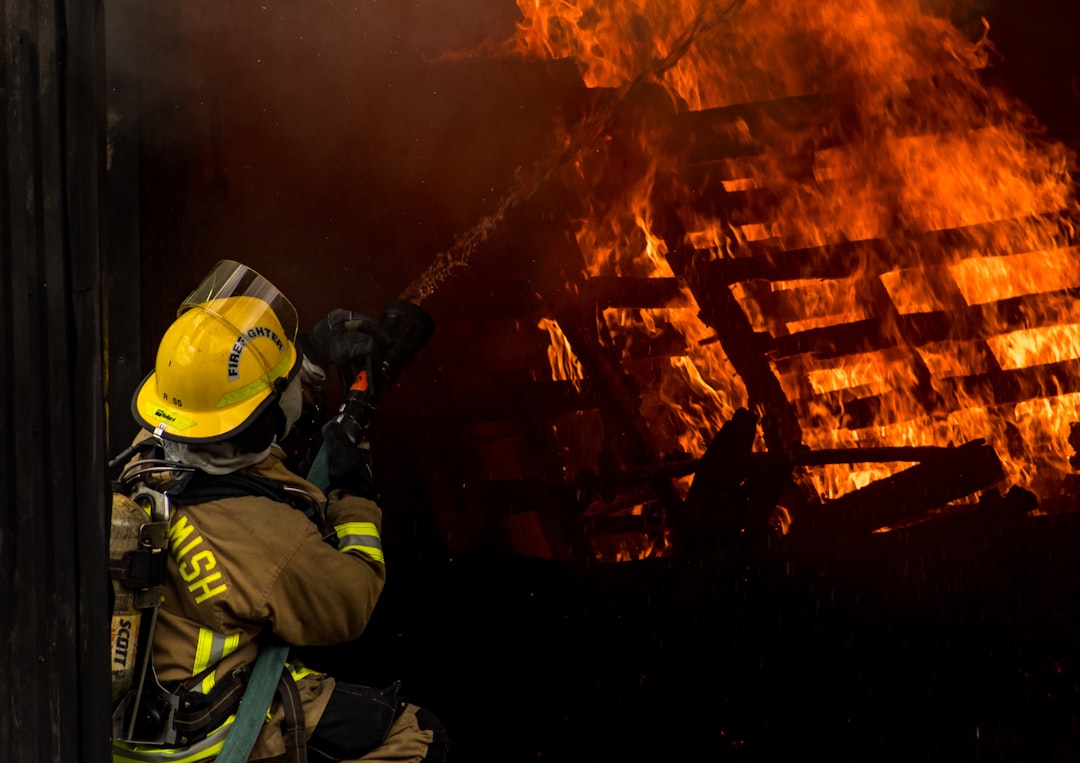
Photograph: Jay Heike / Unsplash
The moment
In early March 2024, Vancouver Fire Chief Nicole Tremblay was conducting a routine building inspection in a densely populated residential district. The purpose was to assess compliance with local fire safety codes and identify potential hazards before they could result in an emergency. As she moved through the apartment complex, her trained eye immediately picked up subtle but critical signs of a hidden danger: narrow, obstructed corridors, an accumulation of clutter blocking fire exits, and an overwhelming amount of combustible debris scattered throughout the unit. These indicators pointed toward a pattern consistent with hoarding behaviour—an often overlooked but serious fire hazard. Recognising the potential severity, Tremblay promptly ordered a specialized hazard assessment, deploying equipment and personnel trained to handle hazardous environments. Her swift decision was rooted in her extensive experience, and it set the stage for a proactive intervention that would prevent a possible disaster.
Why years of experience made the difference
Nicole Tremblay’s twelve years of service in urban fire suppression and rescue coordination had repeatedly demonstrated the importance of hazard recognition beyond standard building codes. Over her career, she had undergone specialized training modules focusing on complex risk factors, including hoarding and clutter-related fire hazards. Unlike routine inspections that often rely on checklists, Tremblay’s expertise was grounded in pattern recognition—she had learned to identify subtle visual cues that signified underlying risks. For instance, she was adept at noticing the density and distribution of debris, understanding how certain clutter patterns could create fire loads exceeding safe thresholds. Her experience also taught her to interpret visual assessment techniques such as observing blocked egress points, noting the proximity of combustible materials to potential ignition sources, and evaluating spatial constraints that hinder safe evacuation.
Her familiarity with the behavioural tendencies associated with hoarding—such as excessive accumulation of paper, textiles, and other combustibles, combined with the frequent obstruction of exits—allowed her to anticipate hazards that might not be immediately obvious. Additionally, her training in hazard stratification enabled her to prioritise responses, deploying equipment like thermal imaging cameras to uncover hidden heat sources behind dense clutter, and pre-positioning rescue and firefighting tools to ensure rapid action if needed. This depth of expertise meant she could act decisively and accurately, often before an incident had a chance to unfold.
What happened next
Following her visual assessment, Tremblay ordered the deployment of a thermal imaging camera into the apartment to scan for hotspots concealed behind the clutter. The device revealed several areas with elevated heat signatures—potential ignition points that, if left unchecked, could have led to a fire outbreak. Recognising this, she coordinated with hazardous environment rescue teams to prepare equipment such as positive pressure ventilation fans, debris removal tools, and personal protective gear suited for confined, cluttered spaces. Her team carefully planned an approach to evacuate vulnerable residents, many of whom had limited mobility, ensuring that egress routes remained accessible and unobstructed during the operation.
The proactive measures allowed the team to clear some of the accumulated debris, improve access to exits, and monitor heat sources continuously. Because of this early intervention, no fire ignited, and the residents were safely evacuated without injury. The structural integrity of the building was preserved, and the potential for catastrophic damage was averted. The incident underscored how a combination of deep expertise and precise technical assessment could preemptively address hazards that might otherwise escalate into tragedy.
What this tells us
This case exemplifies how professional expertise in hazard recognition, honed through years of field experience and specialised training, can make the difference between disaster and prevention. The ability to interpret visual cues, understand behavioural patterns of hoarding, and deploy targeted assessment tools enables emergency responders to identify concealed risks early—long before they manifest as emergencies. Such expertise not only enhances the effectiveness of responses but fundamentally shifts the paradigm from reactive to proactive fire safety management.
- Chief Tremblay’s training included specialized modules on recognizing hoarding and clutter hazards during fire inspections.
- She used visual assessment techniques to identify clutter patterns indicative of hoarding, such as blocked exits and excessive combustible debris.
- The building housed vulnerable residents with limited mobility, increasing the risk of entrapment in a fire.
- She ordered the deployment of a thermal imaging camera to assess heat accumulation and potential ignition sources behind cluttered areas.
- Early detection and intervention prevented a fire from igniting in a cluttered apartment, averting potential casualties and structural damage.
| Subject | Nicole Tremblay (fictional name) |
| Role | Fire Chief, 12 years of experience in urban fire suppression and rescue coordination |
| Location | Vancouver, Canada |
| Period | March 2024 |
| Field | Firefighting & Rescue |
| Region | North America |
| Outcome | The proactive response prevented a possible fire outbreak that could have trapped residents or caused structural damage. The building was safely evacuated, and no injuries occurred. The early intervention avoided costly property damage and potential loss of life, demonstrating the importance of expert recognition and early action. |
This is an illustrative composite case inspired by documented patterns of professional practice in Firefighting & Rescue. Names and identifying details are fictional to protect individual privacy. The techniques, procedures, and field-specific context reflect real professional practice. Written by Aino Virtanen on July 24, 2026. Questions: [email protected].