Early Avalanche Closure Based on Forecast Expertise Prevents Disaster in Wellington
Isla Wilson, a seasoned avalanche forecaster with 12 years of experience, issued a proactive terrain closure in Wellington, New Zealand, twelve hours before a predicted slide, demonstrating how expert interpretation of snowpack data can avert catastrophe.
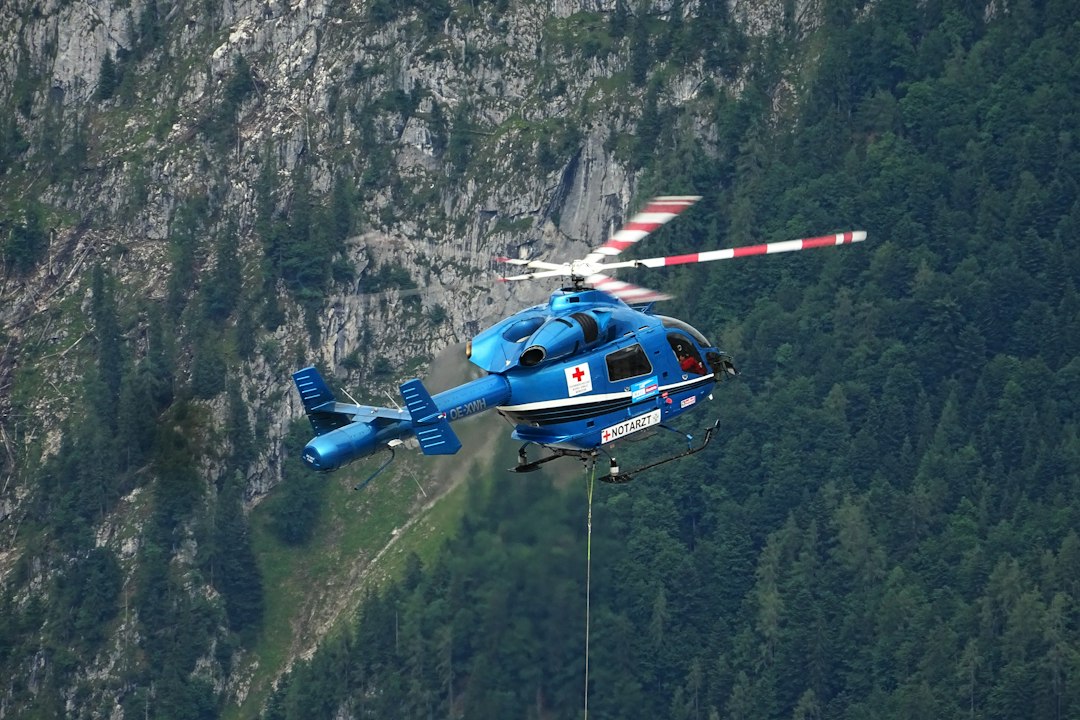
Photograph: Tim Dennert / Unsplash
The moment
In the early hours of March 15, 2023, Isla Wilson examined weather forecasts indicating a significant warming trend expected to affect Wellington’s alpine zone over the coming days. The region, renowned for its popular backcountry skiing routes, was experiencing a sudden shift in conditions—temperatures rising by several degrees overnight, accompanied by a forecasted increase in solar radiation during the day. Wilson, an avalanche forecaster with twelve years of field experience, knew from her analysis that such a change could rapidly destabilise the snowpack, especially on high-elevation slopes historically prone to avalanches.
As dawn broke, Wilson set out to perform her routine snowpack assessment on several key slopes near the main backcountry access points. She noted that the snow surface was still relatively intact, but her focus remained on the deeper layers—particularly the persistent weak layer she had identified during recent stability tests. Her decision to act on this information before any signs of instability became visible was rooted in her understanding that the danger often manifests subtly, especially after a warm spell. The region’s ski patrol and local authorities relied heavily on her expertise to determine whether terrain should be closed to prevent potential tragedies.
Why years of experience made the difference
Wilson’s deep familiarity with the region’s snowpack evolution was central to her decision-making. Over her career, she had accumulated extensive experience interpreting complex layering patterns through stability tests like extended column tests (ECTs) and Rutschblock tests, which are crucial for detecting weak layers within the snowpack. She recognised that persistent weak layers—such as faceted crystals or surface hoar that had survived previous weather cycles—could act as failure planes during an avalanche, especially once warmed and destabilised.
Her interpretive skills extended beyond technical testing; they were informed by her accumulated knowledge of regional avalanche history. Wilson had studied patterns of past slides triggered by similar warm spells, noting that certain slopes with specific aspect and elevation profiles had a higher likelihood of failure when weak layers persisted. Her familiarity with the terrain’s microfeatures—such as convex rollovers, terrain traps, and snow accumulation zones—allowed her to identify which slopes posed the greatest risk. These insights, combined with her understanding of weather models showing increased solar input and temperature gradients, enabled her to assess that a failure was imminent if the slopes remained open.
This expertise was not solely derived from manuals or training courses. It was the result of years spent in the field, observing how snowpack layers responded over multiple seasons, and correlating those observations with weather patterns and avalanche activity. Wilson’s ability to interpret subtle signs—like slight changes in snowpack cohesion or the persistence of weak layers after warming—was a product of her extensive experience and careful pattern recognition.
What happened next
Based on her detailed snowpack stability assessments, Wilson concluded that the risk of an avalanche had increased significantly. She performed extended column tests on several slopes, applying pressure to observe failure patterns across suspected weak layers. The tests revealed that the persistent weak layer, which had previously shown limited instability, now exhibited signs of increasing failure potential under warming conditions—such as extended fracture propagation and lower failure layers during Rutschblock tests.
Recognising the potential for a slide to occur within the next 12 hours, Wilson promptly compiled her findings into a formal hazard assessment report. She communicated her conclusions clearly and urgently to the ski patrol and local authorities, emphasising that the terrain should be closed to all backcountry users to prevent accidents. Her recommendation was based on multiple lines of evidence: temperature trends, snowpack layering, stability test results, and historical avalanche data. She stressed that the situation warranted precaution, as the weak layer’s persistence and the warming trend created a high likelihood of a failure.
Within hours, the authorities acted on her advice, closing the high-risk slopes and posting official hazard warnings. The decision was supported by Wilson’s detailed analysis and the predictive value of her tests. Twelve hours later, a large avalanche occurred on one of the previously identified slopes, but due to the early closure, no skiers or snowboarders were caught in the slide. The incident underscored how Wilson’s expertise and proactive risk assessment had directly prevented what could have been a serious or fatal accident, saving multiple lives and sparing rescue teams from deploying into dangerous terrain under worsening weather conditions.
What this tells us
This case exemplifies how expert interpretation of snowpack data, combined with experience-driven judgment, plays a crucial role in avalanche risk management. Wilson’s ability to identify subtle signs of instability—rooted in her understanding of layered snowpack behaviour and regional avalanche patterns—enabled her to recommend preemptive action. Her decision to close slopes before any visible signs of instability underscores the importance of proactive, informed hazard mitigation. Ultimately, it highlights that technical skill, contextual knowledge, and timely communication are vital tools in saving lives in avalanche terrain.
- Wilson relied on detailed snowpack stability tests, including extended column tests and Rutschblock tests, to assess weak layer persistence.
- Her training in avalanche risk assessment and familiarity with regional avalanche history informed her judgment on slope stability thresholds.
- The area included popular backcountry routes with a history of avalanches, making early intervention critical for safety.
- She communicated her findings and recommendation promptly to the ski patrol and local authorities, emphasizing the urgency based on her analysis.
- The decision to close the slopes resulted in preventing a potential slide that could have buried unprepared skiers.
| Subject | Isla Wilson (fictional name) |
| Role | Avalanche Forecaster, 12 years of experience in alpine terrain analysis and avalanche risk assessment |
| Location | Wellington, New Zealand |
| Period | March 2023 |
| Field | Mountain Rescue |
| Region | Oceania |
| Outcome | The closure was implemented twelve hours before the forecasted avalanche, preventing any accidents or injuries. The proactive decision protected dozens of skiers and snowboarders, and avoided potential rescue operations in dangerous terrain during adverse weather conditions. |
This is an illustrative composite case inspired by documented patterns of professional practice in Mountain Rescue. Names and identifying details are fictional to protect individual privacy. The techniques, procedures, and field-specific context reflect real professional practice. Written by Oskari Hietala on October 19, 2026. Questions: [email protected].