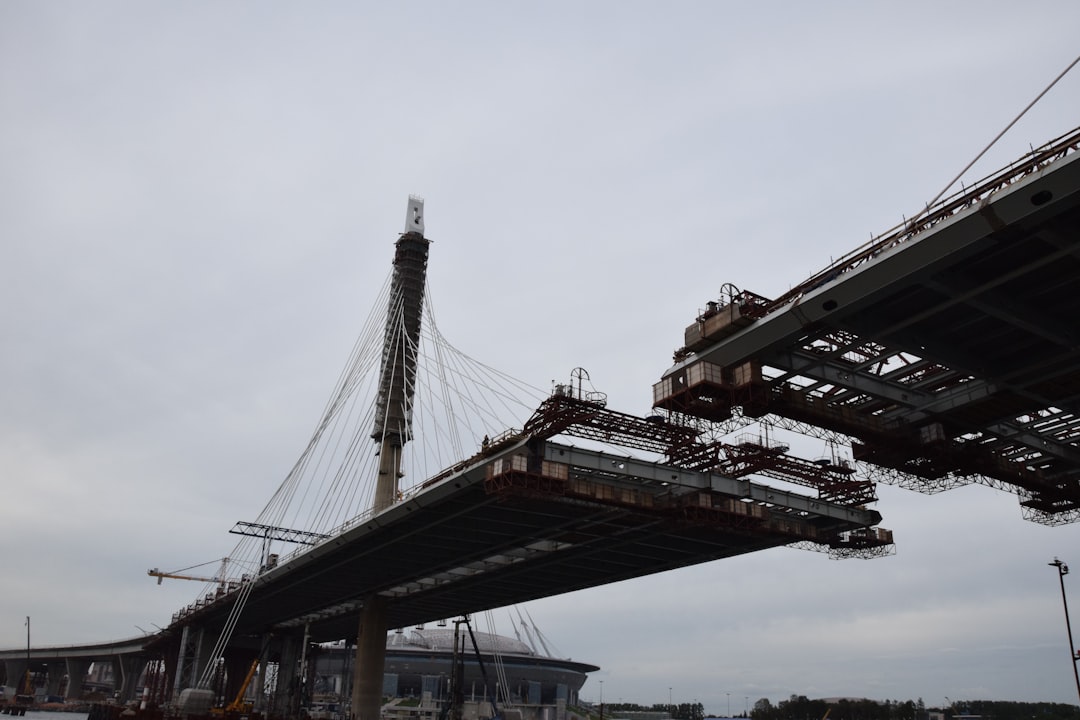
Bridge inspector detects critical fatigue cracks before scheduled maintenance, preventing potential collapse
Jack Brown, a seasoned structural engineer in Brisbane, identified fatigue cracks during routine bridge inspection, demonstrating how expert assessment and non-destructive testing techniques can avert catastrophic failure and ensure public safety.
Photograph: Michael Myers / Unsplash
The moment
In March 2024, on a clear morning in Brisbane, Jack Brown, a senior bridge inspector with over 15 years of experience, arrived at the Riverside Bridge for a scheduled preventive maintenance assessment. The bridge, a vital arterial route connecting multiple suburbs, had been in service for more than three decades. Its age, combined with high traffic volumes and exposure to environmental elements, had prompted routine inspections to ensure ongoing safety. Today, Brown systematically carried out visual assessments, focusing on welds, joints, and load-bearing components. As he examined the critical mid-span region, he noticed subtle surface anomalies—slight discoloration and fine surface cracking—near welds that had historically been identified as fatigue-prone. Recognising that surface signs alone might not tell the full story, he prepared to supplement his visual inspection with ultrasonic testing, aware of the importance of early detection of subsurface deterioration.
Why years of experience made the difference
Brown’s extensive background in structural assessment and maintenance planning had equipped him with a nuanced understanding of fatigue crack initiation and propagation mechanisms in steel bridges. His familiarity with the typical stress concentration points—welds, especially those subjected to cyclic loading—allowed him to interpret the significance of even minor surface irregularities. Over years of inspecting similar bridges, he had observed how fatigue cracks often originate at weld toes or near weld reinforcements, where microstructural imperfections or residual stresses tend to accumulate.
Moreover, Brown’s proficiency with phased array ultrasonic testing (PAUT) was rooted in specialised training aligned with Australian Standards for Bridge Inspection (AS 5100). Unlike standard ultrasonic methods, PAUT provides a detailed, sector-shaped image of the internal structure, enabling detection of very early-stage cracks beneath the surface. His experience in interpreting PAUT data meant he could distinguish between benign indications and those warranting immediate attention. This skill was critical because early fatigue cracks are often invisible to visual inspection and can develop gradually over years before reaching a critical length. Recognising the pattern of crack initiation near stress risers, combined with his familiarity with the bridge’s stress analysis reports, allowed him to identify which welds were at highest risk and needed detailed investigation.
What happened next
Following his visual assessment, Brown performed a systematic phased array ultrasonic testing scan on the welds identified as high-risk based on previous maintenance records and stress analysis data. He meticulously positioned the PAUT transducer along the welds, capturing sector scans that revealed subtle internal reflections indicative of microcracks—cracks too small to be visible externally. These indications confirmed that fatigue cracks had begun to form within the weld metal, especially in areas subjected to high cyclic stresses during daily traffic loads.
Recognising the importance of timely intervention, Brown documented each crack with precise measurements and photographic evidence, then reviewed the stress analysis reports to understand how load distribution contributed to crack growth. His findings prompted a discussion with the maintenance planning team to schedule targeted reinforcement and weld repairs ahead of the next load cycle. The proactive repairs involved localised weld grinding, reinforcement, and the application of stress-relief techniques to mitigate further crack development.
By acting promptly, the team was able to prevent the progression of these early-stage cracks into critical flaws that could have compromised the structural integrity of the bridge. This intervention avoided potential partial or complete closure of the bridge, which would have caused significant disruption to daily commuters and local economies. The early detection and repair also reinforced public confidence in the ongoing safety of the infrastructure, demonstrating the value of expert inspection combined with advanced testing methods.
What this tells us
This case exemplifies how the expertise accumulated through years of practical experience in structural assessment enhances the effectiveness of non-destructive testing techniques. The ability to interpret subtle signs, understand the significance of internal crack indications, and connect these findings with the broader context of stress and fatigue patterns is what allows for timely, targeted maintenance. Such expertise not only prevents catastrophic failure but also extends the service life of critical infrastructure, ensuring safety and operational continuity.
- The Riverside Bridge had been in service for over 30 years, with known fatigue-prone welds near the mid-span.
- Brown’s training included specialized ultrasonic testing in accordance with Australian Standards for Bridge Inspection (AS 5100), emphasizing early crack detection.
- Failure of the bridge could have resulted in severe road closure, economic disruption, and potential injuries or fatalities.
- He systematically performed phased array ultrasonic testing on welds identified as high-risk, focusing on areas with high stress concentration.
- Early detection led to timely repairs, avoiding structural failure and maintaining public confidence in infrastructure safety.
| Subject | Jack Brown (fictional name) |
| Role | Senior Bridge Inspector with 15 years of experience in structural assessment and maintenance planning |
| Location | Brisbane, Australia |
| Period | March 2024 |
| Field | Structural Engineering |
| Region | Oceania |
| Outcome | The cracks were documented, and targeted reinforcement and weld repairs were scheduled ahead of the next load cycle. This proactive intervention prevented an estimated risk of progressive crack growth leading to structural failure, ensuring the safety of thousands of daily commuters. |
This is an illustrative composite case inspired by documented patterns of professional practice in Structural Engineering. Names and identifying details are fictional to protect individual privacy. The techniques, procedures, and field-specific context reflect real professional practice. Written by Helena Korhonen on September 23, 2026. Questions: [email protected].